
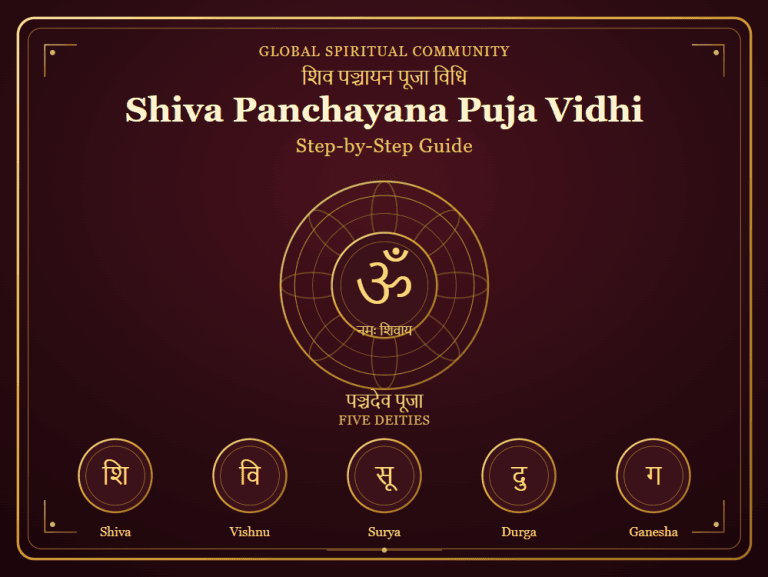
Shiva Panchayana Puja Procedure – Global Spiritual Community · Guided by Prakash Bolakhe
This is a structured version of your Shiva Panchayana Puja procedure, organized for personal practice, family worship, and introducing international spiritual seekers to Sanātana Vedic traditions.
The five principal deities are भगवान् शिव, भगवान् विष्णु, भगवान् सूर्य, माता दुर्गा, and भगवान् गणेश. The sequence below preserves your intended worship, while correcting some obvious Sanskrit spelling and mantra-recitation errors where identifiable. Exact procedures and mantras can vary by family tradition, sampradāya, and the guidance of an Āchārya.
प्रथम भागः: पूर्वतयारी (Preparation)
१. आचमनम्: Āchamana
Take a small amount of clean water in the right palm and recite the following names, sipping water according to your tradition:
ॐ केशवाय नमः।
ॐ माधवाय नमः।
ॐ नारायणाय नमः।
ॐ गोविन्दाय नमः।
२. हस्तप्रक्षालनम्: Washing the hands
Wash your hands and prepare yourself for worship with a calm mind and a pure intention.
३. भस्मधारणम्: Applying sacred ash
Apply sacred ash (भस्म or विभूति) according to your tradition. A commonly recited mantra is:
त्र्यायुषं जमदग्नेः कश्यपस्य त्र्यायुषम्।
The traditional full verse and the placement of the ash vary by ritual text. Your supplied wording appears to combine portions of a longer Bhāsmadhāraṇa mantra, so it should be verified against your family’s paddhati before formal recitation.
४. रुद्राक्षधारणम्: Wearing Rudrākṣa
Wear your Rudrākṣa mālā with reverence and recite the Mahāmṛtyuñjaya mantra:
ॐ त्र्यम्बकं यजामहे सुगन्धिं पुष्टिवर्धनम्।
उर्वारुकमिव बन्धनान्मृत्योर्मुक्षीय मामृतात्॥
५. पञ्चदेवध्यानम्: Meditation on the five deities
Meditate upon Shiva, Vishnu, Surya, Durga, and Ganesha. Offer respectful prostrations (साष्टाङ्ग प्रणाम) according to your capacity and tradition.
६. आसनशुद्धिः: Purification of the seat
A commonly used Āsana purification mantra is:
ॐ पृथ्वि त्वया धृता लोका देवि त्वं विष्णुना धृता।
त्वं च धारय मां देवि पवित्रं कुरु चासनम्॥
Sit comfortably on a clean, dedicated āsana.
द्वितीय भागः: पूजासामग्री व्यवस्था (Arrangement of Puja Materials)
७. पूजास्थलस्य व्यवस्था: Preparing the altar
Arrange the following materials neatly before beginning:
- Left side: Kalasha, bell, incense holder, and oil lamp.
- Right side: Ghee lamp, conch shell (शङ्ख), and water for offerings.
- In front of the worshipper: Kumkum, sandalwood paste, flowers, rice grains (अक्षता), camphor, and other offerings.
- Near the deities: Flowers, garlands, fruits, vegetarian naivedya, and dakṣiṇā.
Use a red-and-white rangoli or a traditional mandala to decorate the space. Keep the Havan Kund separate from the rangoli and other combustible materials if a havan will follow the puja.
८. मानसपूजा: Mānasa Pūjā
Mentally offer flowers, sandalwood paste, incense, light, food, and your devotion to the five deities. You may then offer the corresponding physical items as prescribed by your tradition.
९. विघ्नहर्ता श्रीगणेशस्मरणम्: Remembering Ganesha
Begin by remembering Lord Ganesha, the remover of obstacles.
ॐ श्री गणेशाय नमः।
ॐ गणपतये नमः।
वक्रतुण्ड महाकाय सूर्यकोटिसमप्रभ।
निर्विघ्नं कुरु मे देव सर्वकार्येषु सर्वदा॥
Offer flowers, अक्षता, and a prayer for the successful completion of the worship.
१०. पूजासङ्कल्पः: Sankalpa
State your intention clearly. You may perform the puja as:
- निष्काम सङ्कल्पः: Without seeking personal reward, for devotion, spiritual growth, and universal welfare.
- सकाम सङ्कल्पः: With a specific personal or family prayer.
A simple universal intention is:
लोकाः समस्ताः सुखिनो भवन्तु।
May all beings everywhere be happy.
११. घण्टापूजनम्: Worship of the bell
Ring the bell respectfully and recite:
आगमार्थं तु देवानां गमनार्थं तु रक्षसाम्।
घण्टानादं करिष्यामि देवताह्वानलाञ्छनम्॥
This is a commonly used bell mantra; wording can vary across ritual traditions.
१२. शङ्खपूजनम्: Worship of the conch
Offer sandalwood paste and flowers to the conch.
ॐ शङ्खाय नमः।
चन्दनं समर्पयामि।
पुष्पं समर्पयामि।
१३. जलप्रोक्षणम्: Sprinkling sanctified water
Sprinkle clean water around the worship space and, where appropriate, upon yourself and the participants.
ॐ अपवित्रः पवित्रो वा सर्वावस्थां गतोऽपि वा।
यः स्मरेत् पुण्डरीकाक्षं स बाह्याभ्यन्तरः शुचिः॥
१४. कलशपूजनम्: Worship of the Kalasha
Place a clean water-filled Kalasha on a stable base. Add the substances prescribed by your tradition, such as flowers, sandalwood, and leaves.
Recite:
ॐ कलशाय नमः।
ॐ जलदेवताभ्यो नमः।
Treat the Kalasha as a sacred symbol of auspiciousness, purity, and the presence of divine blessings.
तृतीय भागः: पञ्चदेवपूजा (Worship of the Five Deities)
१५. पञ्चदेवध्यानम्: Meditation on the five deities
Meditate on each deity individually, recalling their divine qualities and your intention to worship them with reverence.
१६. पञ्चदेवावाहनम्: Invocation
For each deity, invoke the divine presence according to your lineage’s ritual instructions. A simple collective offering formula is:
ॐ शिवाय नमः। आवाहनार्थे पुष्पं समर्पयामि।
ॐ विष्णवे नमः। आवाहनार्थे पुष्पं समर्पयामि।
ॐ सूर्याय नमः। आवाहनार्थे पुष्पं समर्पयामि।
ॐ दुर्गायै नमः। आवाहनार्थे पुष्पं समर्पयामि।
ॐ गणेशाय नमः। आवाहनार्थे पुष्पं समर्पयामि।
१७. आसनम्: Offering a seat
For each deity, recite the appropriate mantra and offer a flower or अक्षता as a symbolic seat.
ॐ शिवाय नमः। आसनं समर्पयामि।
ॐ विष्णवे नमः। आसनं समर्पयामि।
ॐ सूर्याय नमः। आसनं समर्पयामि।
ॐ दुर्गायै नमः। आसनं समर्पयामि।
ॐ गणेशाय नमः। आसनं समर्पयामि।
१८. पाद्यम्: Offering water for the feet
ॐ शिवाय नमः। पाद्यं समर्पयामि।
ॐ विष्णवे नमः। पाद्यं समर्पयामि।
ॐ सूर्याय नमः। पाद्यं समर्पयामि।
ॐ दुर्गायै नमः। पाद्यं समर्पयामि।
ॐ गणेशाय नमः। पाद्यं समर्पयामि।
१९. अर्घ्यम्: Offering respectful water
Offer water as a traditional gesture of welcome and respect.
ॐ शिवाय नमः। अर्घ्यं समर्पयामि।
ॐ विष्णवे नमः। अर्घ्यं समर्पयामि।
ॐ सूर्याय नमः। अर्घ्यं समर्पयामि।
ॐ दुर्गायै नमः। अर्घ्यं समर्पयामि।
ॐ गणेशाय नमः। अर्घ्यं समर्पयामि।
२०. स्नानम्: Ritual bathing
Offer pañcāmṛta (पञ्चामृत) and then clean water, if appropriate for the deity images or Śiva Liṅga being worshipped. For images that should not be wetted, use symbolic offerings instead.
ॐ शिवाय नमः। पञ्चामृतस्नानं समर्पयामि।
ॐ शिवाय नमः। शुद्धोदकस्नानं समर्पयामि।
Repeat the corresponding offering according to the ritual instructions for Vishnu, Surya, Durga, and Ganesha.
२१. वस्त्र, यज्ञोपवीत, पुष्पमाला तथा उपचाराः
Offer the following, as applicable:
- वस्त्रं समर्पयामि: clothing.
- उपवस्त्रं समर्पयामि: additional cloth.
- यज्ञोपवीतं समर्पयामि: sacred thread.
- गन्धं समर्पयामि: sandalwood paste or fragrance.
- पुष्पं समर्पयामि: flowers.
- पुष्पमालां समर्पयामि: flower garland.
- धूपमाघ्रापयामि: incense.
- दीपं दर्शयामि: offering of light.
- नैवेद्यं निवेदयामि: food offering.
- दक्षिणां समर्पयामि: respectful offering or donation.
Perform these offerings to the five deities according to the materials available and your established Puja Vidhi.
चतुर्थ भागः: शिवलिङ्गपूजा तथा स्तोत्रपाठ
२२. श्रीलिङ्गाष्टकम्: Śrī Liṅgāṣṭakam
Recite the eight verses in praise of Lord Shiva’s sacred Liṅga. The standard opening verses are given below; use a reliable text for the complete eight-verse recitation.
प्रथमः श्लोकः
ब्रह्ममुरारिसुरार्चितलिङ्गं
निर्मलभासितशोभितलिङ्गम्।
जन्मजदुःखविनाशकलिङ्गं
तत्प्रणमामि सदाशिवलिङ्गम्॥
द्वितीयः श्लोकः
देवमुनिप्रवरार्चितलिङ्गं
कामदहं करुणाकरलिङ्गम्।
रावणदर्पविनाशनलिङ्गं
तत्प्रणमामि सदाशिवलिङ्गम्॥
तृतीयः श्लोकः
सर्वसुगन्धिसुलेपितलिङ्गं
बुद्धिविवर्धनकारणलिङ्गम्।
सिद्धसुरासुरवन्दितलिङ्गं
तत्प्रणमामि सदाशिवलिङ्गम्॥
चतुर्थः श्लोकः
कनकमहामणिभूषितलिङ्गं
फणिपतिवेष्टितशोभितलिङ्गम्।
दक्षसुयज्ञविनाशनलिङ्गं
तत्प्रणमामि सदाशिवलिङ्गम्॥
पञ्चमः श्लोकः
कुङ्कुमचन्दनलेपितलिङ्गं
पङ्कजहारसुशोभितलिङ्गम्।
सञ्चितपापविनाशनलिङ्गं
तत्प्रणमामि सदाशिवलिङ्गम्॥
षष्ठः श्लोकः
देवगणार्चितसेवितलिङ्गं
भावैर्भक्तिभिरेव च लिङ्गम्।
दिनकरकोटिप्रभाकरलिङ्गं
तत्प्रणमामि सदाशिवलिङ्गम्॥
सप्तमः श्लोकः
अष्टदलोपरिवेष्टितलिङ्गं
सर्वसमुद्भवकारणलिङ्गम्।
अष्टदरिद्रविनाशितलिङ्गं
तत्प्रणमामि सदाशिवलिङ्गम्॥
अष्टमः श्लोकः
सुरगुरुसुरवरपूजितलिङ्गं
सुरवनपुष्पसदार्चितलिङ्गम्।
परात्परं परमात्मक लिङ्गं
तत्प्रणमामि सदाशिवलिङ्गम्॥
फलश्रुतिः
लिङ्गाष्टकमिदं पुण्यं यः पठेत् शिवसन्निधौ।
शिवलोकमवाप्नोति शिवेन सह मोदते॥
After the recitation, chant:
ॐ नमः शिवाय।
हर हर भोले नमः शिवाय।
२३. शिवपञ्चाक्षरस्तोत्रम्: Śiva Pañcākṣara Stotram
Recite the five-syllable hymn beginning with Nāgendrahārāya Trilocanāya. It praises Lord Shiva through the five sacred syllables न-म-शि-वा-य.
नागेन्द्रहाराय त्रिलोचनाय
भस्माङ्गरागाय महेश्वराय।
नित्याय शुद्धाय दिगम्बराय
तस्मै नकाराय नमः शिवाय॥
Continue with the remaining verses of the Pañcākṣara Stotram.
२४. मन्त्रपुष्पाञ्जलिः: Mantra and flower offering
Offer flowers and अक्षता with folded hands.
ॐ नमः शिवाय।
Offer your prayers for the welfare of all beings and the harmony of the universe.
पञ्चम भागः: आरती तथा समापन (Aarti and Conclusion)
२५. आरती: Śiva Āratī
Sing your preferred traditional Shiva Aarti, including:
जय शिव शङ्कर शम्भो।
जय गिरिजाधीश शिव।
जय जय करुणासागर।
पशुपति जगदीश॥
Conclude with:
ॐ हर हर हर महादेव॥
२६. आरतीपश्चात् जलप्रोक्षणम्
After completing the Aarti, sprinkle a little water from the conch around the worship space and, if appropriate, upon the participants. Handle the conch according to your tradition.
२७. प्रदक्षिणा: Circumambulation
Perform pradakṣiṇā according to the prescribed practice for your shrine. For a Śiva Liṅga, follow your tradition’s specific rules concerning circumambulation and the sacred outlet (somasūtra).
Offer the prayer:
ॐ शिवाय नमः। प्रदक्षिणां समर्पयामि।
२८. क्षमायाचना: Prayer for forgiveness
Pray sincerely for any mistakes in pronunciation, materials, or procedure.
मन्त्रहीनं क्रियाहीनं भक्तिहीनं जनार्दन।
यत्पूजितं मया देव परिपूर्णं तदस्तु मे॥
आवाहनं न जानामि न जानामि विसर्जनम्।
पूजां चैव न जानामि क्षमस्व परमेश्वर॥
अन्यथा शरणं नास्ति त्वमेव शरणं मम।
तस्मात्कारुण्यभावेन रक्ष मां परमेश्वर॥
These are commonly recited forms; adapt the wording appropriately when addressing the individual deities.
२९. प्रसादग्रहणम्: Receiving Prasāda
Offer your respects, receive the flowers and sandalwood paste as prasāda, and distribute the food offering among the participants.
३०. कर्मसमर्पणम्: Dedication of the worship
Conclude by dedicating all the worship and its fruits to the Divine.
ॐ तत्सद् ब्रह्मार्पणमस्तु।
ॐ विष्णवे नमः।
ॐ विष्णवे नमः।
ॐ विष्णवे नमः।
ॐ नमः शिवाय।
ॐ नमः पार्वतीपतये।
हर हर महादेव शम्भो॥
Continue with your devotional chanting:
शिव शिव शिव शम्भो।
महादेव शम्भो॥
षष्ठ भागः: जयघोष तथा विश्वशान्तिप्रार्थना
३१. देवदेवी जयघोषः: Invocations of praise
Conclude with devotional जयघोष in accordance with your local and family traditions:
- जय श्रीपशुपतिनाथ भगवान् की जय।
- जय गुह्येश्वरी माताकी जय।
- जय दक्षिणकाली माताकी जय।
- जय कुलयोगिनी माताकी जय।
- जय बागभैरव भगवान् की जय।
- जय अष्टभैरव भगवान् की जय।
- जय चतुःषष्टि ज्योतिर्लिङ्ग भगवान् की जय।
- जय चतुःषष्टि योगिनी माताकी जय।
- जय समस्त ऋषि-मुनि तथा सन्त-महात्माओं की जय।
- सनातन वैदिक धर्म की जय।
- सम्पूर्ण भक्तजनहरूको जय।
You may also acknowledge the Vaiṣṇava, Śaiva, Śākta, Gāṇapatya, and Saura traditions with respect, recognizing the diversity of Sanātana Dharma.
३२. सर्वे भवन्तु सुखिनः: Universal peace prayer
॥ सर्वमङ्गलम् ॥
ॐ सर्वे भवन्तु सुखिनः।
सर्वे सन्तु निरामयाः।
सर्वे भद्राणि पश्यन्तु।
मा कश्चिद्दुःखभाग्भवेत्॥
ॐ शान्तिः शान्तिः शान्तिः॥
May all be happy. May all be free from illness. May all experience auspiciousness. May none suffer. Peace, peace, peace.
Important Distinction: Panchayan Puja and Panchayan Havan
Your procedure above is primarily a Panchayan Puja Vidhi. If you wish to continue with a Panchayan Havan, that is a separate ritual stage involving the prescribed fire preparation, Agni invocation, offerings, and concluding rites. The Havan mantras and offerings should follow the relevant Vedic or family tradition rather than being assumed from the Puja sequence.
Recommended Structure for a Printed Manual
For a printed manual for the Global Spiritual Community, I recommend keeping three distinct sections:
- पूर्वाङ्ग पूजा: Preparation and purification.
- शिव पञ्चायन पूजा: Worship of the five deities, stotras, and Aarti.
- शिव पञ्चायन हवन एवं पूर्णाहुति: Fire ritual and its conclusion.
This separation will make the procedure easier for both Nepali practitioners and international participants to follow.
Contact Us
- Kritipur, Kathmandu, Nepal
- +977-9851154156
- bolakheprakash@gmail.com
- website: bolakheprakash.com.np