
Prakash Bolakhe Luitel Aananda Kaushikananda
Explore spiritual guidance, Sanatani wisdom, and conscious leadership rooted in balance, service, and a stronger future for Nepal.
Discover teachings, meditation practices, sustainable village ideas, and sacred journeys designed for reflection and meaningful living.
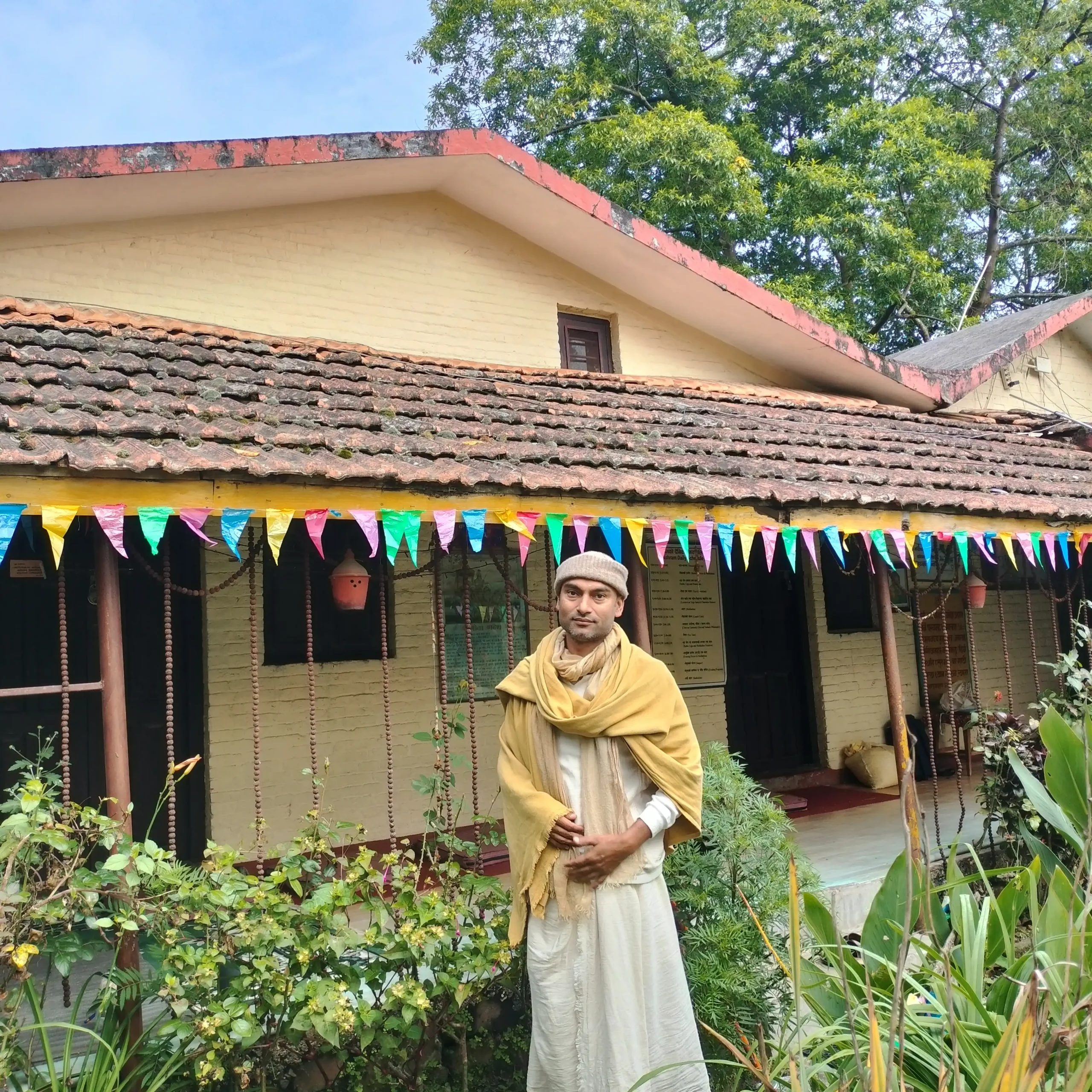
A roadmap for Future Nepal rooted in balance, ethics and prosperity
Nepal stands at a unique historical moment. The country holds deep cultural memory, spiritual heritage, and natural abundance. The roadmap presented by Prakash Bolakhe Aananda focuses on a balanced future where economic development does not come at the cost of harmony, ethics, or ecological care. It is described as a practical path for real prosperity, one that responds to real conditions and views growth as a responsibility as much as an opportunity.
Productive yet Peaceful
A high-output economy that prioritizes social harmony, non violence, and internal stability. Productivity grows when people feel safe, calm, and rooted in purpose. Peace is treated as part of the foundation, not as an optional extra.
Modern yet Moral
Technology and digital systems are welcomed when they support people without eroding cultural values. The work described here does not reject progress, but insists that ethical standards and traditional wisdom remain relevant.
Prosperous yet Humble
Prosperity is not only measured by income or scale. It includes local livelihoods, knowledge, culture, spiritual health, and dignity. A meaningful economy respects both material success and inner clarity.
Strong State
Resilient democratic institutions, a merit-based judiciary, and a professional bureaucracy are seen as necessary for stability. A strong state provides structure, fairness, and long-term possibility.
Free Citizens
Individual rights and civic participation are protected through the rule of law. Citizens are encouraged to take part in public life with responsibility, mutual respect, and awareness of the wider community.
Honest Economy
A transparent digital system that limits corruption and creates legal stability for investment and everyday life. Trust is seen as essential for both local entrepreneurship and national confidence.
Conscious Society
A nation focused on holistic health, spiritual awareness, and the preservation of ecological and scientific heritage. This includes nutrition, fitness, mindfulness, and a deeper sense of responsibility to nature and future generations.
A Global Spiritual Community
Prakash Bolakhe Aananda aims to position Nepal as a regional hub for services, research, peace, and mindful living. By encouraging a balanced foreign policy rooted in Ahimsa, or non violence, Nepal can become a bridge of trust for the world. The approach favors cooperation, respect for all traditions, and a practical form of spirituality that benefits both local communities and global seekers.
The community is open to people who wish to learn, serve, and practice conscious living. Activities range from the study of Sanatan teachings to support for sustainable local economies. The emphasis is on lived values, not abstract concepts.
Spiritual Journey with Divine Flow
This is a sacred movement guided by devotion and awareness. In this journey, there is no fixed itinerary because the path of devotion is not designed by the mind alone. It is shaped by divine consciousness, inner calling, and the felt rhythm of the moment.
Participants carry a simple understanding of geography, yet they do not travel with rigid plans. They surrender to the flow of the universe and move according to the vibration they receive. They may arrive at one sacred place and remain there for a few moments, hours, or even many days. The process is not merely movement from one destination to another. It is a pilgrimage of surrender where each step is directed by devotion, divine energy, and the unseen flow of the Supreme.
Manifesting sustainable and spiritual villages, Sanatani Villages
The Path of the Conscious Village is a long-term effort to create a network of sustainable and spiritual villages. These Sanatani Villages integrate spiritual practice, ecological care, and livelihoods that keep families connected to their land, culture, and sense of purpose.
Spiritual Path through Ashram Immersion
Ashram immersion is presented as a time for learning, reflection, and simple living. Visitors experience daily rhythms that support physical health, mental clarity, and spiritual inquiry. The emphasis is on balance: modern knowledge, Ayurveda, mindfulness, and lifestyle prevention all work together.
Spiritual Tourism Hubs
There is a strong focus on sacred geography, with Devghat framed as the Yoga Hub of Nepal, Janakpur as a center of pilgrimage, and Lumbini as a global peace center. These sites are not treated as destinations alone, but as living spaces where history, devotion, and local life meet.
The Movement: Farm to Fashion
Building a circular economy from farm to fashion is part of a larger philosophy of conscious craft and sustainability. This connects farmers who grow natural fibers with artisans who spin, dye, and weave. Castello Cashmere Industries is described as a premium handmade natural fiber clothing brand that bridges traditional Nepalese craftsmanship and global markets. Lomanthang Cashmere sources authentic Chyangra cashmere from Upper Mustang and reflects a strong commitment to natural materials and ethical production.
Agro Development and ODOP
One District One Product models are described as a way to create economic dignity in every district through local agriculture and production. The idea supports local food systems, seed diversity, and value addition at the district level. It encourages pride in native crops and crafts while improving income for farming families.
Craft Revival
Heritage tourism and traditional creative industries are strengthened through craft revival in places such as Lalitpur and Bhaktapur. Newari woodwork, metalwork, textiles, and stone work carry deep cultural knowledge. Revival means preserving these traditions while creating fair livelihoods and meaningful markets.
Vedic Health
A national focus on nutrition, fitness, mindfulness, and holistic healthcare systems. Vedic health is understood as daily discipline, including food awareness, movement, breathing, and mental calm. It supports well-being and complements modern care through lifestyle education and preventive practice.
Conscious Entrepreneurship
Local employment and craftsmanship are linked directly to sustainable tourism and ethical business models. Entrepreneurs are encouraged to build enterprises that respect labor, materials, and community. Income and meaning are kept together.
Sustainability, Consciousness and Natural Circularity
Mindful systems are created around ecological balance and conscious living. Natural and circular approaches open space for rural jobs through natural materials, industrial hemp, textiles, and eco construction. The emphasis is on materials that can return to the earth and systems that reduce waste.
The associated initiatives described here come from the reference website and include Spiritual Tourism Nepal, Castello Cashmere Industries, and Lomanthang Cashmere. They are framed around mindful living, heritage preservation, and circular economy.
Chakra Therapy Massage and Chakra Sound Meditation
A calming practice that blends gentle bodywork with sacred sound to support balance, relaxation, and inner awareness.
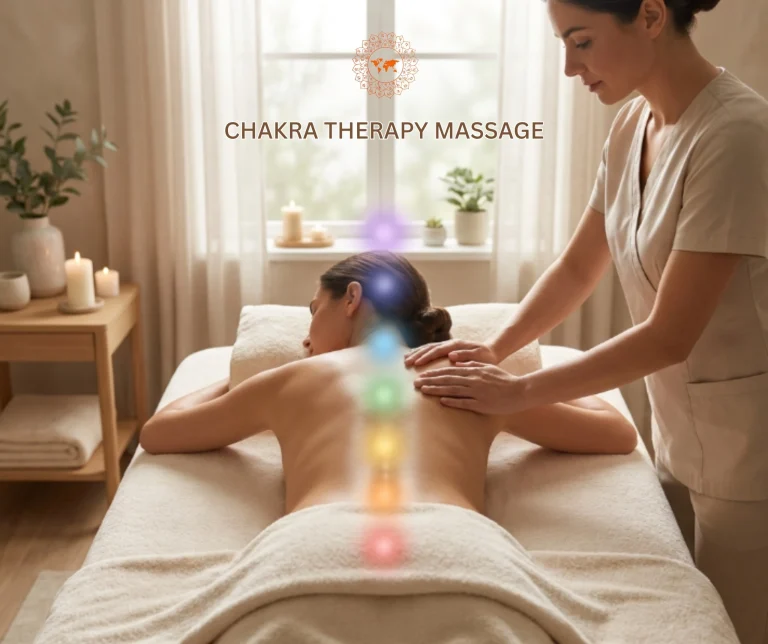
Chakra Therapy Massage
Chakra therapy massage uses gentle touch and energy awareness to calm the mind, release tension, and align the body’s seven main energy centers. It is practiced as a mindful, restorative experience for relaxation and clarity.
Chakra Sound Meditation and Singing Bowl Ceremony
Sound is one of the most ancient ways human beings connect with the inner self. In Sanatan tradition, Nada is understood as sacred vibration, and deep listening becomes a doorway to meditation, awareness, and inner stillness. This practice combines singing bowl resonance, Bija Mantras, conscious breathing, silence, and awareness of the seven principal chakra centers.
The ceremony begins with a clean and quiet space. The participant is invited to lie comfortably in Savasana, and a diya or candle is lit as a symbol of Jyoti, or inner light. A simple intention is set: may this practice bring peace, awareness, harmony, and conscious presence.
Conscious breathing follows. Several slow and natural breaths help the body relax and the mind become still. The invocation of Om is chanted three times, allowing the vibration of Om to fill the space.
- Journey from root to crown: The practice begins at Muladhara and gradually moves upward toward Sahasrara. At each center, the singing bowl is gently played, followed by the corresponding Bija Mantra.
- Bija Mantras: Lam for Root, Vam for Sacral, Ram for Solar Plexus, Yam for Heart, Ham for Throat, Om for Third Eye, Aum for Crown.
- Sequence: Singing bowl, resonance, Bija Mantra, breath, silence, awareness. The participant is invited to bring attention to each chakra while remaining relaxed and receptive.
- From sound to silence: As the journey moves upward, external sound becomes internal experience. Bowl creates vibration, mantra creates awareness, breath creates presence, silence creates space for consciousness.
- Closing: At Sahasrara, sound becomes subtle. Om Aum is chanted three times and allowed to dissolve into silence. Several minutes of stillness follow before returning gently.
Devi Panchayan and the unity of the Divine
Devi Panchayan is a sacred worship tradition that centers the Divine Mother while honoring Shiva, Vishnu, Ganesha, and Surya. It reflects the idea that all forms of the Divine are expressions of one truth, encouraging unity, devotion, and spiritual balance.
Each deity carries a unique quality, yet together they symbolize harmony in the universe and the five elements of nature. The practice reminds devotees that worship can be both inclusive and deeply personal.
Five elements and spiritual meaning
The sacred arrangement also represents the five classical elements: Earth, Water, Fire, Air, and Space or Ether. These elements exist both in the universe and in the human body. Devi Panchayan reminds devotees that divine consciousness is present everywhere and that balance among elements supports inner balance. The practice encourages recognition of unity within diversity.
Benefits and purpose shared in source
- Strengthens faith in the Divine Mother and offers a complete and balanced approach to worship rather than focusing on a single aspect only.
- Promotes harmony among different Hindu traditions and encourages respect for every path of devotion without claiming one way is superior.
- Encourages positive thinking, compassion, patience, and self-discipline through regular practice and mindful attention.
- Many devotees believe sincere prayers help remove obstacles, reduce negative influences, improve family harmony, and attract prosperity when combined with ethical living.
- Meditation and regular worship create a peaceful environment that supports both spiritual and emotional well-being.
Why devotees choose this practice
People choose Devi Panchayan because it honors multiple divine forms while recognizing their ultimate unity. This timeless tradition also encourages harmony in families and communities by promoting unity instead of division. Whether practiced at home or in temples, it continues to inspire faith, wisdom, compassion, and spiritual growth for devotees around the world.
Devi Panchayan is part of daily worship for many households in Nepal and across the Hindu world. The arrangement and mantras can vary by family lineage and local custom. The essential meaning remains the same: all forms are honored as expressions of one consciousness.
Sacred 64 Siddalinga Jyotirlinga Pada Yatra Nepal
A 42-day sacred walk through Nepal that combines devotion, pilgrimage, and a deep respect for nature and self-transformation.
Three circles around Pashupatinath
The 64 Siddalinga pilgrimage follows a sacred route around Pashupatinath, honoring Shiva through daily Rudra Abhishek and mindful walking. It brings together spiritual practice, community support, and reverence for the holy rivers and landscapes of Nepal.
Rituals and environmental message
Throughout the yatra, 64 Siddalinga Rudra Abhisheks were performed. The trip concluded at Rudragadeshwor, Pashupatinath Temple, with Bagmati worship, Pashupati Rudra Abhishek, and a large 64 Siddalinga Havan. The yatra was not only about spiritual growth. It carried a strong focus on protecting the environment and keeping rivers clean. Pure water is needed for sacred Rudra Abhishek, so pollution directly affects spiritual heritage. Participants reflected on past actions that harmed nature and offered prayers for Deva Adhikar, or divine rights of nature.
64 Siddha Jyotirlingas list from source
The full list includes sacred sites across Sindhuli, Dolakha, Sindhupalchok, Kavrepalanchok, Lalitpur, Makwanpur, Kathmandu, Nuwakot, Dhading, and Bhaktapur districts within Brihat Pashupat Kshetra, the Greater Pashupat Sacred Region.
- Kusheshwar Mahadev — Dumja, Sindhuli
- Bhimeshwar Mahadev — Dolakha
- Kafishwar Mahadev — Bahrabise, Sindhupalchok
- Kashyapeshwar Mahadev — Mandan, Kavrepalanchok
- Sphatikeshwar Mahadev — Phatakshila, Sindhupalchok
- Chandeshwar Mahadev — Banepa, Kavrepalanchok
- Dhaneshwar Mahadev — Banepa, Kavrepalanchok
- Vikateshwar Mahadev — Sanga, Kavrepalanchok
- Indreshwar Mahadev — Panauti, Kavrepalanchok
- Bhaleshwar Mahadev — Roshi, Kavrepalanchok
- Gupteshwar Mahadev — Bhardeu, Lalitpur
- Tileshwar Mahadev — Lele, Lalitpur
- Champakeshwar Mahadev — Lele, Lalitpur
- Rameshwar Mahadev — Tikabhairav, Lalitpur
- Kaleshwar Mahadev — Gotikhel, Lalitpur
- Natarambheshwar Mahadev — Thingan, Makwanpur
- Uddalkeshwar Mahadev — Chhaimale, Kathmandu
- Gopaleshwar Mahadev — Pharping, Kathmandu
- And 46 more sacred lingas up to Rudragaareshwar Mahadev — Pashupati, Kathmandu
Conscious work across Nepal
Explore the initiatives connected with Prakash Bolakhe Aananda through craft, mindful travel, and sustainable living.

Castello Cashmere Industries
Handmade natural-fiber clothing rooted in Nepalese craft and ethical production.

Lomanthang Cashmere
Authentic Chyangra cashmere connecting Upper Mustang with conscious fashion.

Spiritual Tourism Nepal
Mindful journeys, sacred sites, yoga, peace, and Vedic health in Nepal.
Read the latest articles
Practical reflections on spiritual practice, meditation, and conscious living.
Traditional Herbal Bathing
A practical guide to a traditional herbal and spiritual bathing setup.
Chakra Therapy Massage
Explore bodywork, energy awareness, and the seven main chakra centers.
Chakra Sound Meditation
Discover singing bowls, bija mantras, breath, silence, and inner awareness.
Frequently asked questions
These questions are based on information already present on the reference website. Answers use only supported information and clarify practical points for visitors.
Connect with Prakash Bolakhe Aananda
For teachings, practices, conscious village initiatives, or spiritual tourism guidance, you are welcome to reach out. All communication is centered in Kritipur, Kathmandu, Nepal.
Send an Inquiry on WhatsApp
WhatsApp is the preferred channel for inquiries. You can ask about ashram immersion, spiritual tourism hubs like Devghat, Janakpur, and Lumbini, Vedic health and mindfulness practices, farm to fashion and craft revival work, or participation in contemplative practices such as chakra therapy massage and sound meditation.
When you message, share your name, where you are writing from, and what you would like to learn or explore. This helps provide a clear and respectful response aligned with the spirit of conscious communication.
WhatsApp UsThis page is offered for spiritual, contemplative, and educational purposes. Practices described are not a substitute for medical diagnosis or treatment.